
Nobody can completely stop another person choosing to bully.
Research shows that autistic people are bullied more often than non-autistic people. This article looks at things that may help before, during and after bullying happens. Some of the ideas are aimed at autistic people themselves. Others are for parents, carers, family members, friends, teachers and anyone else supporting an autistic person.
Even confident, popular and well-supported people can be bullied. This means that being bullied should never be seen as a failure or as something a person has caused. However, confidence and self-esteem can make a difference.
Self-confidence is how much a person believes they can cope with challenges, solve problems and try new things.
Self-esteem is how a person feels about themselves overall. It includes recognising strengths as well as difficulties.
People with healthy self-confidence and self-esteem are often better able to recognise bullying, ask for help and recover from difficult experiences.
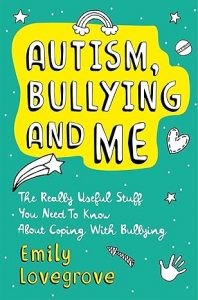
Dr Emily Lovegrove is an expert on bullying and has written Autism Bullying and Me (see the Resources list at the bottom of the page). She talks about the importance of building self-confidence and self-esteem, not just focusing on what to do after bullying happens.
Self-confidence often grows when people try new things, learn new skills and discover that they can cope with challenges.
Self-esteem often grows when people notice their strengths, spend time with people who treat them with kindness and respect, and learn to accept themselves as they are.
Many autistic people spend a lot of time managing challenges and working out ways to cope with things they find difficult. It is just as important to notice and value strengths.
Every autistic person is different. Strengths look different from person to person. Some people may be kind, creative, determined or good at solving problems. Others may have excellent knowledge about a favourite subject, a great memory, a strong sense of fairness, or strengths that are less obvious but just as important.
Taking time to notice strengths and achievements can help build both self-confidence and self-esteem.
If you are supporting an autistic person, helping them recognise their strengths can be just as important as helping them manage challenges.
Many autistic people say that learning about autism helped them understand themselves better.
Learning about autism can help people see that some of the things they struggle with are linked to the way their brain works. It can help people see that being different does not mean there is something wrong with them.
Autistic people should not have to hide who they are to deserve friendship, respect or acceptance.
The goal is not to become more like everyone else. The goal is to understand who a person is, recognise their strengths and needs, and help them find places where they can feel comfortable being themselves.
Having supportive people around you can make a real difference.
These might be friends, family members, teachers, support workers, colleagues, neighbours or other autistic people.
You do not need a large group of friends. For many people, one or two trusted people are enough.
Knowing there are people who will listen, offer support and stand alongside you can help build confidence and remind you of your strengths when things are difficult.
Shared interests often help people build genuine friendships.
Whether you enjoy gaming, art, music, animals, technology, crafts, sport or something else, spending time with people who enjoy similar things can help you feel accepted and understood.
For many autistic people, interests are an important source of enjoyment, confidence and connection with other people.
It is often easier to feel confident when your needs are being met.
Getting enough sleep, managing sensory needs, spending time on enjoyable activities and making time to rest can all help people feel better able to cope with life’s challenges.
Looking after yourself cannot stop somebody else deciding to bully. However, it can help you feel stronger and better able to deal with difficulties if they happen.
There is no single response that works every time. Different situations need different approaches.
Staying calm
One thing that often helps is staying as calm as possible. This is not because the bullying is acceptable. It is because some bullies enjoy seeing that they have upset somebody.
Some people find it helpful to take slow breaths or focus on what they can see, hear or feel around them. This is sometimes called grounding. Grounding helps bring attention back to the present moment when someone is feeling overwhelmed. Mindfulness may also be helpful.
It is usually not helpful to respond with insults or threats. Research suggests that fighting back in this way can sometimes make bullying worse.
Responding calmly and clearly
Sometimes a simple response works best. For example:
- “Stop.”
- “That’s not OK.”
- “Leave me alone.”
- “I don’t like that.”
If you are being bullied, there is no need to get into a long argument.
Using humour
Humour can sometimes take the power out of a bully’s comment although, should never be used if it makes you feel uncomfortable.
However, humour does not work in every situation and should be used carefully.
Dr Emily Lovegrove suggests that self-deprecating humour can sometimes help. Self-deprecating humour means gently laughing at yourself instead of becoming upset or defensive.
For example:
Person bullying: “You’re so obsessed with trains.”
Response: “True. If there was an exam on trains, I’d probably get full marks.”
The aim is not to agree that something is wrong with you. The aim is to show that you are comfortable with who you are and not embarrassed by your interests.
This strategy often works best when a person already has some confidence and self-esteem.
Should you explain?
Sometimes people make comments because they do not understand why somebody behaves differently.
You do not have to explain yourself. However, some people choose to give a short explanation if they think it can help.
For example:
- “I’m autistic. My brain works a bit differently.”
- “I like routine because it helps me stay organised.”
- “I use headphones because sounds can be overwhelming.”
Keeping explanations calm, brief, and matter of fact is often most effective and be aware if you are using masking as a coping strategy.
If you are being bullied, try not to deal with it on your own.
Talk to somebody you trust and tell them what has been happening.
It can also help to keep a record of what happened, when it happened and who was involved. If the bullying happened online, screenshots or messages may be useful.
Many schools, colleges, workplaces and organisations have ways for people to report bullying. Using these can help make sure concerns are taken seriously.
If you are supporting somebody who is being bullied, listening, believing them and helping them find support can make a huge difference.
Bullying does not only happen face to face.
People can bully others through social media, messaging apps, websites and online games.
If bullying happens online, it can help to:
- Save evidence.
- Block the person where possible.
- Report harmful content.
- Tell somebody you trust.
- Take a break from online spaces if needed.
Nobody should have to deal with online bullying alone.
Bullying can be upsetting, but it does not define who you are.
If you are autistic, you do not need to change who you are in order to deserve friendship, respect and acceptance.
Building confidence, recognising strengths, finding supportive people and getting help when needed can all make a difference.
Every autistic person deserves to feel safe, valued and able to be themselves.
Key points

- Self-confidence is how much a person believes they can cope with challenges and solve problems.
- Self-esteem is how a person feels about themselves overall.
- Building confidence and self-esteem can help reduce the effects of bullying.
- Understanding autism can help people recognise strengths and accept themselves.
- Supportive friends, family members and other trusted people can make a big difference.
- Staying calm, using clear responses and getting support may help in the moment.
- Reporting bullying and keeping evidence can be important.
- Autistic people do not need to change who they are to deserve respect, friendship and acceptance.